
11 min read · 20 March 2026 · Tim Etherington-Judge
We Used to Have One of the World's Best Bottle Return Systems. We Chose to Dismantle It.
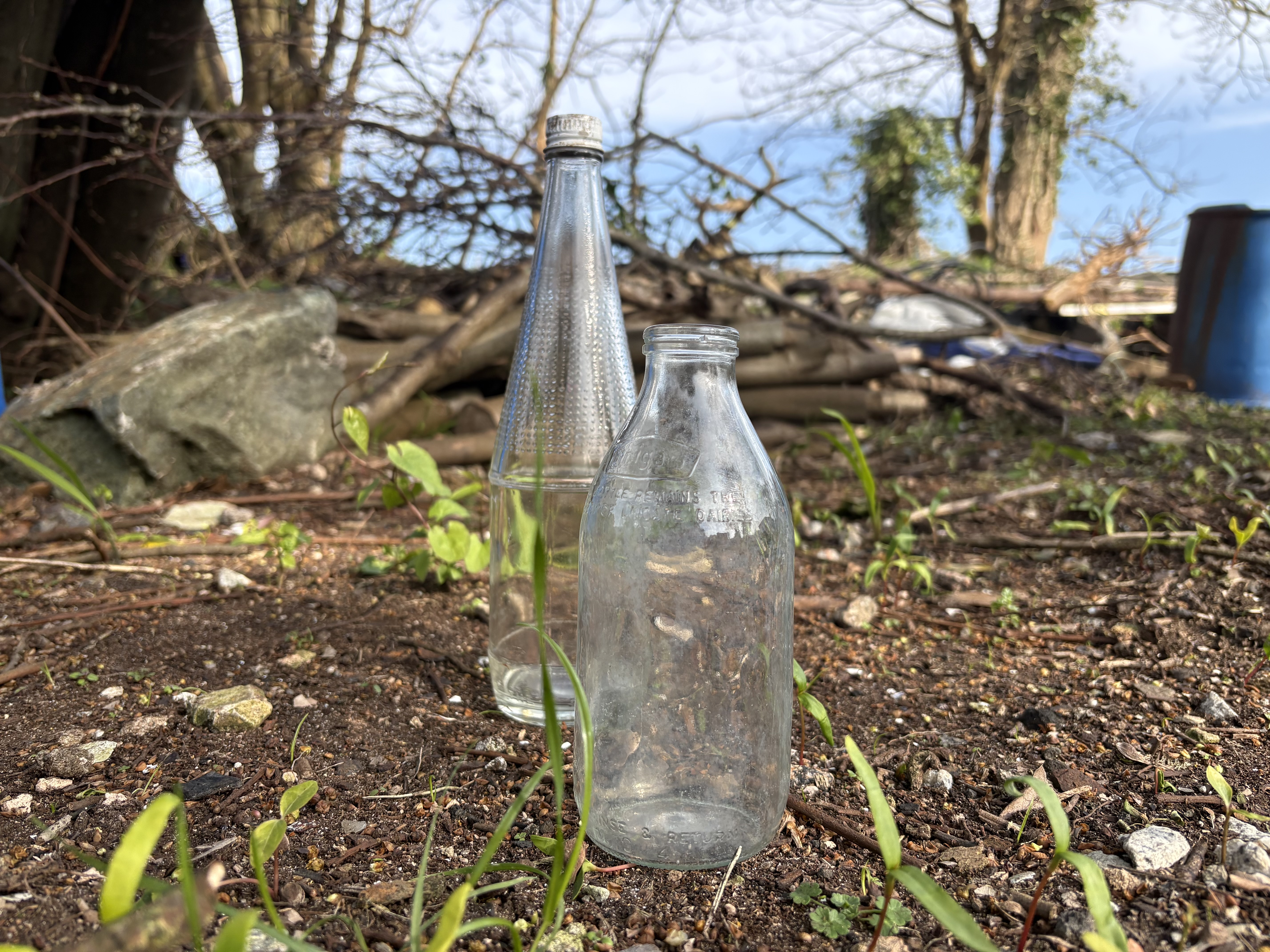
Last summer, I dug two bottles out of my garden. One was a Corona soft drinks bottle, embossed with the words This Bottle Is The Property of Corona. The other was a Unigate milk bottle — instantly nostalgic to anyone who grew up in Britain. Neither is remarkable on its own. Together, they tell the story of a circular system that once operated at extraordinary national scale, required no legislation, was embedded in daily life for generations, and that we quietly allowed to disappear. As the UK prepares to launch its Deposit Return Scheme in October 2027, it is worth being honest about what Exchange for Change actually is — and what it is not. It is a recycling scheme. And the two bottles sitting on my desk are a reminder that we once had something considerably more ambitious than that.
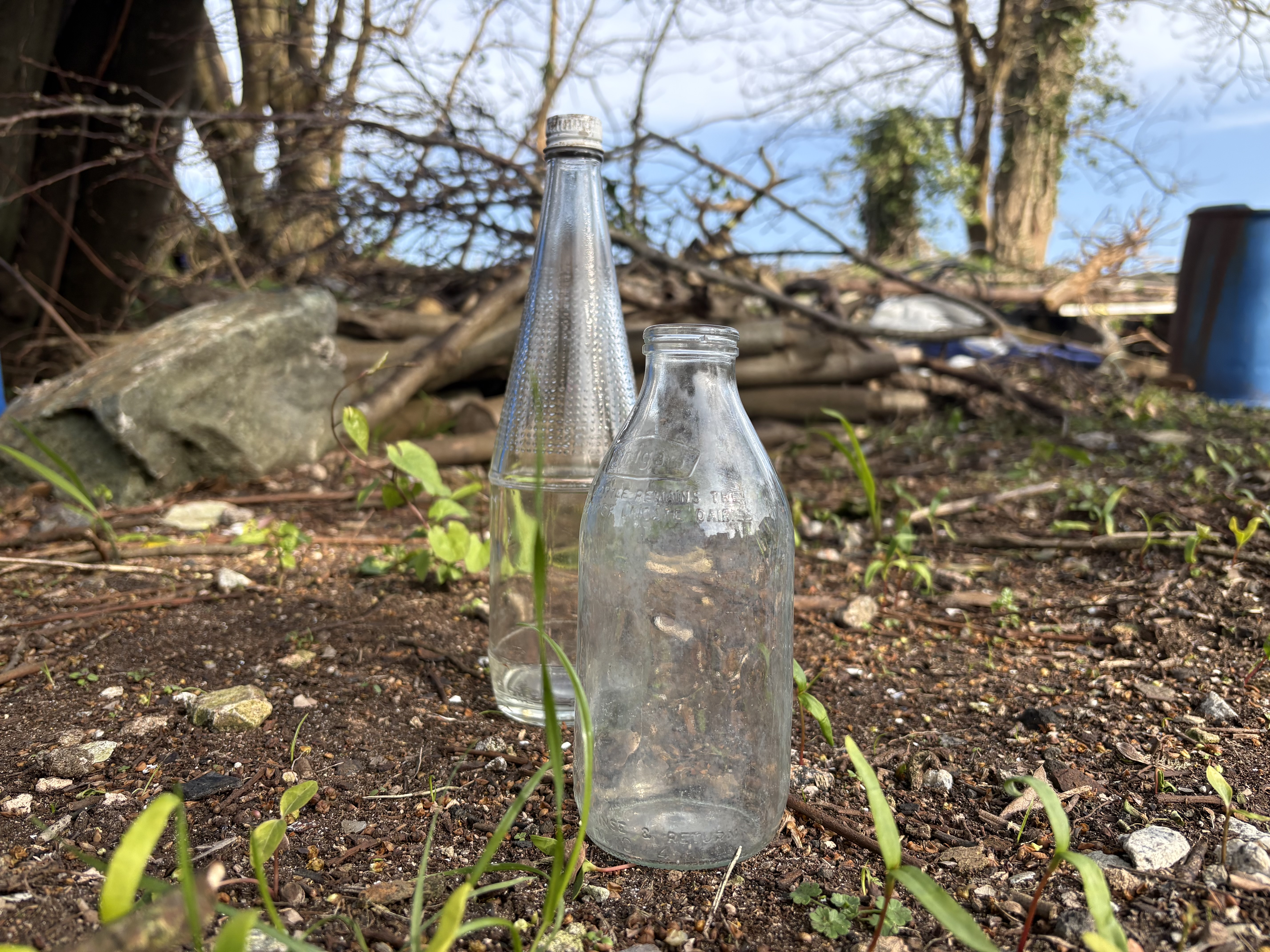
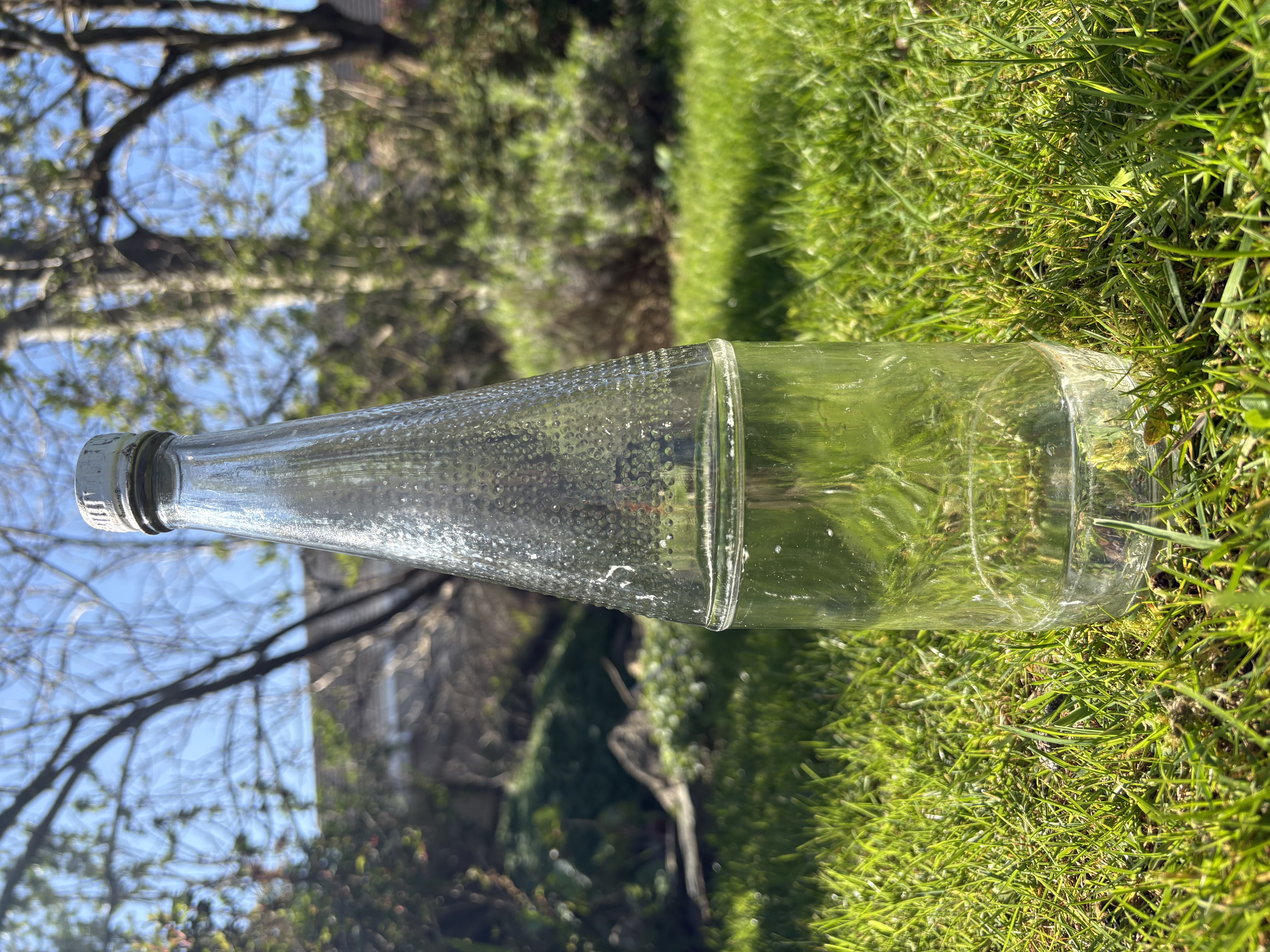
Last summer I dug two bottles out of the soil in my garden. One was a Corona soda bottle, a tall, flint glass, with 'This Bottle Is The Property of Corona' embossed around the bottom. The other was a Unigate milk bottle, the kind that once sat on practically every doorstep in Britain, and instantly nostalgic. Neither bottle is remarkable on its own, but together, they tell a story about a circular system that worked at extraordinary scale across the UK, that required no legislation to get started, that was embedded in daily life for generations, and that we quietly allowed to disappear.
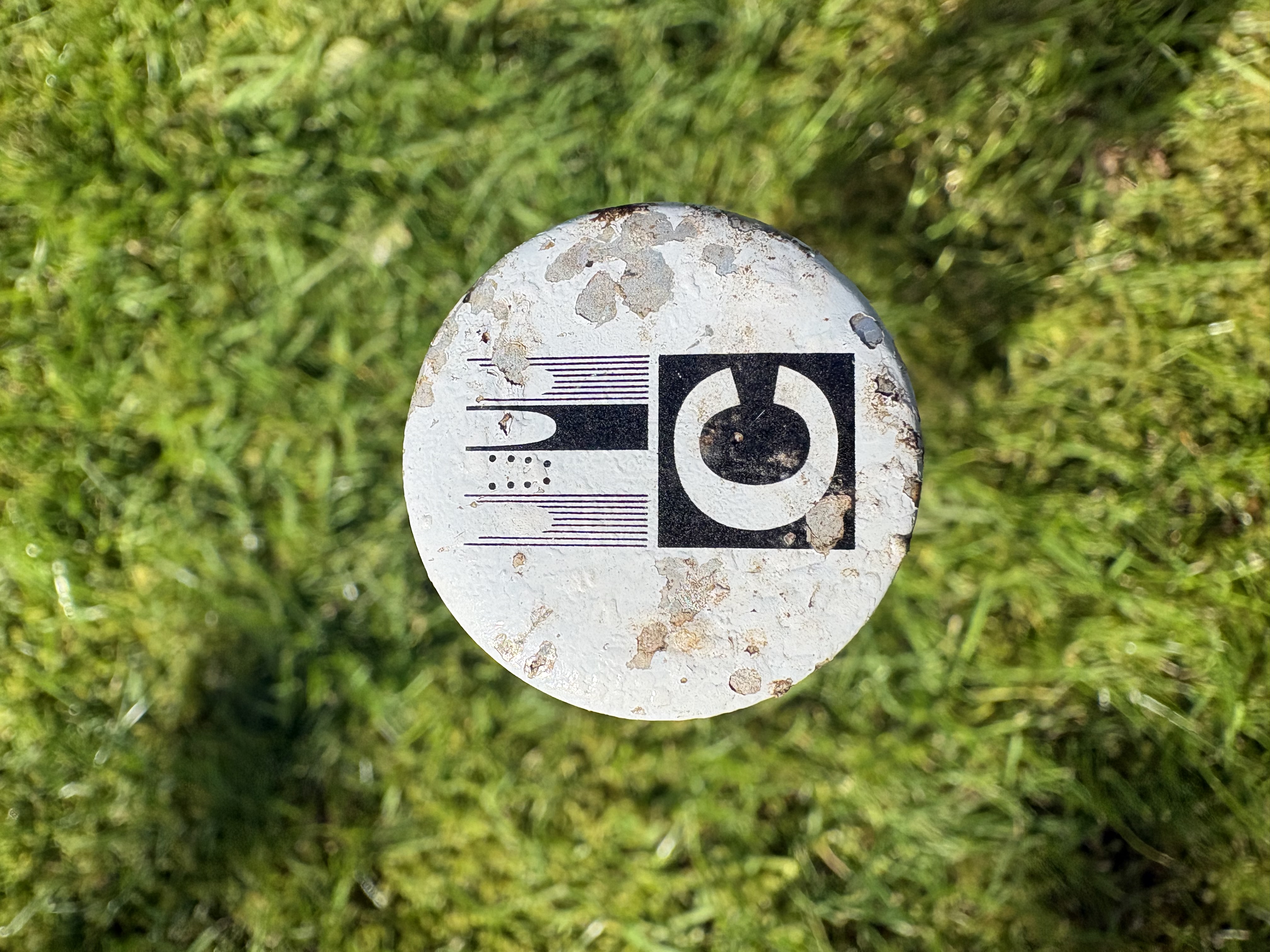
As I write this, we are, as a country, preparing to launch a Deposit Return Scheme in October 2027. It has a logo (that kinda looks like a baseball bat going through a meat slicer), a name (Exchange for Change), and a 20p deposit on plastic bottles and cans. It is a meaningful step forward. It is also, if we are honest about the history buried in those two, once buried, bottles, a significantly less ambitious version of what we once had. It's also important to note that Wales has decided to include glass in their DRS.
The Welsh Valley Company That Built Circular Distribution from Scratch
The Corona (no, not that Corona) bottle I found is a piece of Welsh industrial history that most people have forgotten or never known. I remember as a child visiting my grandmother, that she would collect her bottles and then together we would go to the local corner store, return the bottles, and I'd get to keep the 10p per bottle as my pocket money.
Corona was a truly pioneering company, especially if you apply the lens of the modern non-alc movement. Founded in 1897 in Porth, in the Rhondda Valley, Wales, by two visionary grocers, William Thomas and William Evans, who were troubled by the amount of money local miners were spending on alcohol. Their solution was to build a factory producing carbonated soft drinks as an affordable, appealing alternative: the Welsh Hills Mineral Water Factory.
What is remarkable, looking back, is that the deposit return system was not an afterthought. The factory was designed with bottle-cleaning machinery from the outset, specifically so that glass bottles could be safely sterilised and reused after being returned by the customer for a small deposit. The whole business model was built around circularity: produce, deliver, collect, clean, refill, repeat. Plastic was yet to be invented and glass was an expensive, valuable resource.
By the early 1920s, when Evans rebranded the company as Corona, the company had over 200 salesmen delivering across Wales by horse-drawn wagon. At its peak, Corona had 82 distribution depots and five factories, producing 170 million bottles a year. In 1950 they launched Tango, a brand that's still around today and part of Carlsberg/Britvic.
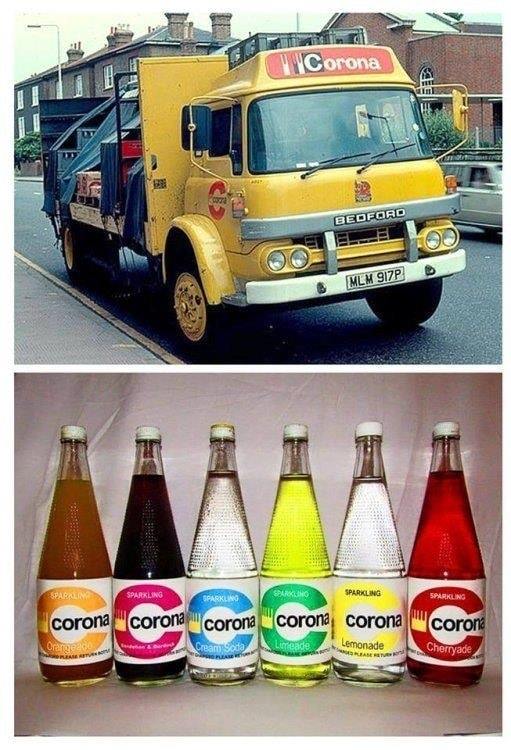
The deposit was 10 pence by the time the scheme was winding down in the 1980s. Children across Britain (including yours truly) knew that a walk around the local park or a poke around a hedgerow could turn up a Corona bottle worth returning to the off-licence (10p was a lot of money to an 80's kid and would get you 2 Freddo's!).
It was, in the truest sense, a system that paid people to close the loop. Not because the government mandated it, but because the business model demanded it. Corona could only operate on thin margins if the glass came back.
The company was sold to the Beecham Group in 1958, and to Britannia Soft Drinks (Britvic's parent) in 1987, the same year the Welsh Hills factory in Porth closed and production moved to Bolton. The brand was discontinued in the late 1990s. The factory became a music recording studio. The bottles became garden archaeology.
The Milk Bottle: 40 Million Deliveries a Day, Closed Loop
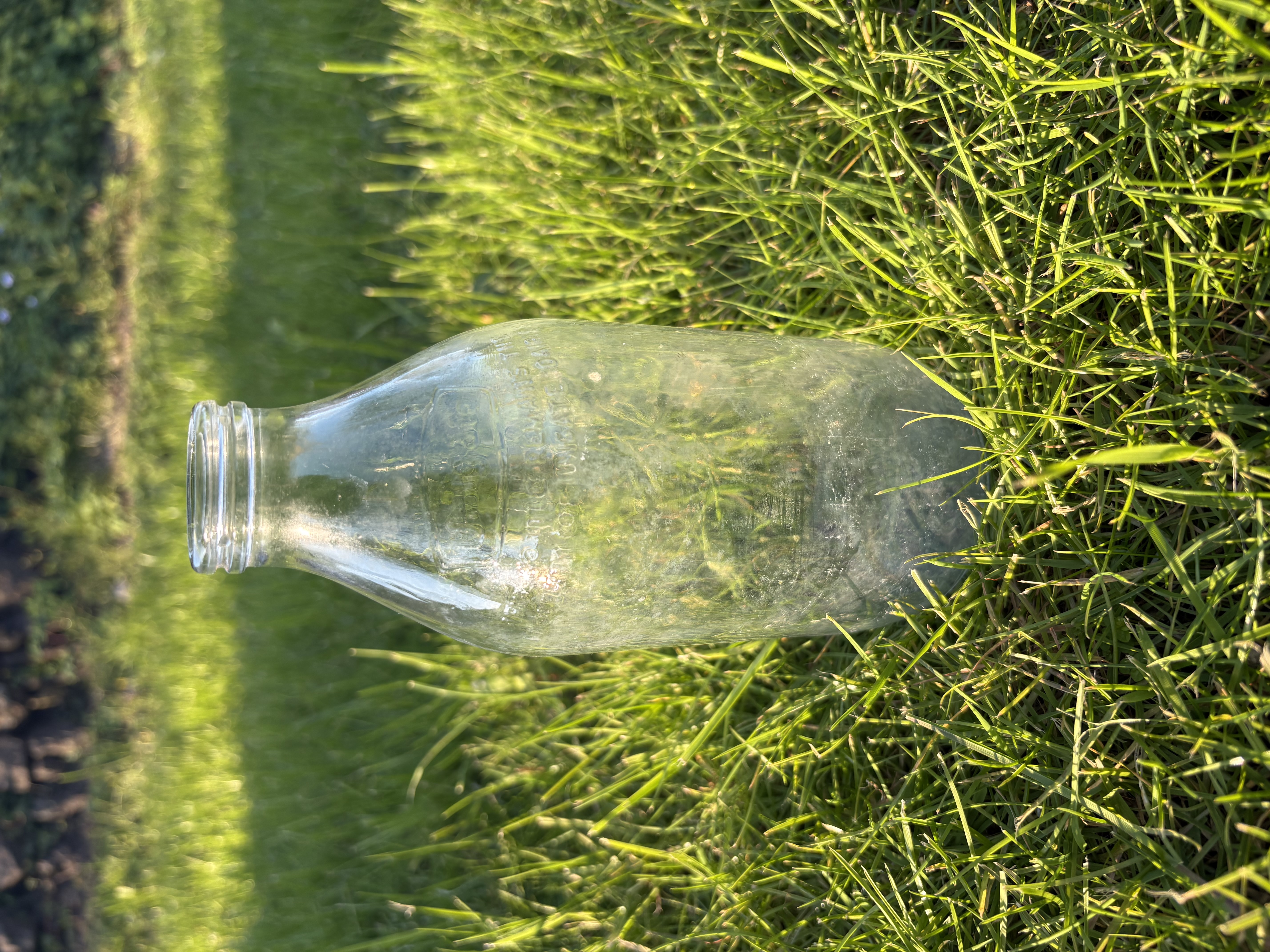
The Unigate bottle I found is a slightly different story but the same principle. United Dairies was formed in 1915, pioneered the sale of pasteurised milk in Britain by the late 1920s, and merged with Cow & Gate in 1959 to form Unigate, which became the UK's largest dairy company.
At its peak in the early 1990s, 40 million glass milk bottles were being delivered to UK doorsteps every single day. The system was genuinely circular. Bottles were delivered by electric milk float, left on the step, rinsed by the household, collected on the next round, returned to the dairy, sterilised in hot water, refilled, recapped, and sent out again. Life cycle analysis suggests each glass bottle in a well-run doorstep system was reused up to 40 times before breakage or retirement!
(Modern studies confirm that glass bottles outperform single-use plastic on carbon footprint as long as they are reused a minimum of five times and the environmental advantage compounds significantly after that.)
This was not a niche or a premium product. This was the mainstream. Over 90% of milk consumed in the UK in the 1960s was delivered to the door in a glass bottle that went round and round and round the same loop.
The system unravelled after milk market deregulation in 1994, which allowed supermarkets to sell milk in plastic containers as a loss leader. The infrastructure that had kept the closed loop viable, the daily round, the electric float, the central dairy washing line, became commercially marginal almost overnight. By 2000, Unigate had sold its milk and cheese division to Dairy Crest and renamed itself Uniq. By 2011 it had been absorbed into Greencore.
How the Informal System Actually Worked
What the Corona model and the milk bottle had in common was that neither required a government scheme to function. They were manufacturer-led circular systems, built on a simple commercial logic: glass is worth recovering.
The deposit (a ha'penny a bottle in the 1920s, rising to 10p by the 1980s) created a direct financial incentive for return. The door-to-door collection model provided the infrastructure to make return effortless. And critically, the manufacturer controlled the whole loop: production, distribution, collection, cleaning, and refilling. There was no complexity of third-party returns infrastructure, no reverse vending machines to procure and maintain, no question of where the bottle went after it left the household.
In parallel with the soft drinks system, the milk system was operating at a scale that remains genuinely extraordinary to look back on. Forty million bottles a day. Forty uses per bottle. That is the kind of material efficiency that modern circular economy frameworks would love to replicate.
The combined effect was a country where glass moved in closed loops, not as a policy ambition or over complicated scheme, but as normal commercial practice. What dismantled it was not a policy decision either. It was the supermarket model: cheap plastic, lost leaders, and deregulation. No single person decided to end the UK's most successful reuse system. It just became commercially inconvenient, and nothing was in place to prevent its disappearance.
What the Rest of Europe Kept Doing
While the UK was quietly abandoning its bottle return infrastructure, other European countries were formalising and building on theirs.
Norway has had a deposit system for reusable glass bottles since 1902. Not 2002. 1902. (That's even older than Joe Biden!) The country introduced reverse vending machines in the 1970s to automate the return of refillable glass, and legislated a full DRS in 1999. Today Norway achieves a 90-92% return rate on PET bottles and cans.
Germany legislated its Einwegpfand deposit system in 2002, with it coming into force in January 2003. The German system goes further than most: it includes glass, and — critically — it distinguishes between single-use and reusable containers, with different deposit values designed to actively incentivise the latter. Today 42% of all beverages in Germany are filled in refillable containers, and the country achieves a 98% return rate on eligible single-use containers across a network of 135,000 return points. That is not a recycling rate. That is a recovery rate. Those bottles come back.
Sweden legislated a DRS in 1984 starting with cans, expanding to PET in 1994. Sweden's glass bottle recycling system goes back to 1884, with standardised bottles from 1885. The Nordic countries collectively achieve return rates of between 85 and 95% across their various schemes.
Ireland launched its DRS in February 2024. Within the first year, 1.2 billion containers were collected across 3,200 return points. By August 2024, the monthly return rate had reached 73%, and continued to climb. Drinks-can litter dropped by 30% within the scheme's first year. Plastic bottle litter dropped by 20%.
These are not experiments. These are mature systems (with the exception of Ireland's new scheme) with decades of operational history, delivering return rates that would have seemed perfectly normal to the milkman making his round in 1975.
What Exchange for Change Gets Right, and What It Misses
The UK's Deposit Return Scheme, launching in October 2027 under the brand name Exchange for Change, is a step in the right direction. Consumers will pay a 20p deposit on single-use drinks containers between 150ml and 3 litres. The containers are returned to reverse vending machines at retailers, and the deposit is refunded instantly. The scheme is administered by the UK Deposit Management Organisation, a not-for-profit industry body.
The target is a 90% return rate for plastic bottles and cans. Based on the international evidence, this is entirely achievable with the right deposit value and return infrastructure.
There are 2 massive elephants in the room however. Given the very public failure of the recent DRS plans in Scotland, can Exchange for Change learn from those mistakes and implement a successful scheme? And Exchange for Change is not a reuse scheme, it is a recycling scheme.
And there is also a significant omission that is hard to ignore: glass is excluded. England and Northern Ireland will not include glass containers in the scheme. The government cited concerns about safety, storage, and recycling quality (I'm sure the failure of the Scottish DRS was also an unspoken factor). Thankfully, the Welsh have seen sense and is running its own aligned scheme and has included glass. Perhaps they were inspired by their visionary greengrocers William Thomas and William Evans.
This is where the history matters. Glass is the material the UK has the deepest institutional memory of reusing. It is the material that went around the loop 40 times in the milk system. It is the material that funded the Corona deposit from 1897 onwards. It is found on half of UK beaches in 2025, according to the Marine Conservation Society. And, most importantly, it is the one material that genuinely lends itself to reuse rather than just recycling because unlike plastic or aluminium, glass can be sterilised and refilled without degradation, indefinitely. I would quite happily use my dug up Corona bottle as my daily water bottle after sterilisation.
Exchange for Change is a recycling scheme, not a reuse scheme. That is a meaningful distinction. Germany and Norway have understood for decades that reuse and recycling are not the same thing, and that the former is considerably better for the planet than the latter. Recycling glass still requires energy-intensive melting and saves about 1/3 of the emissions of producing a new bottle. Refilling a glass bottle requires washing it. The embodied carbon difference between those two processes is substantial.
The Argument Those Two Bottles Make
I am not suggesting we return to the milkman, although some areas of the UK are starting to see a return of the daily milk bottle on the doorstep. The economics of doorstep delivery in 2026 are not what they were in 1976 despite the near constant Amazon/DPD deliveries. Supermarkets are not going away and the logistics landscape has changed fundamentally.
But the argument those two bottles make is not really about nostalgia, it is about precedent.
We did not once have an idealistic policy proposal for a bottle return system. We had one, operating at national scale, embedded in daily life, financed entirely by commercial logic, achieving extraordinary material efficiency, without a single reverse vending machine or government mandate.
We had 40 million glass bottles a day moving in closed loops. We had a soft drinks company in South Wales designing its factory around reuse in 1897, because it was the only way the economics worked.
That system did not fail. It was not superseded by something better for the planet. It was displaced by something cheaper and more convenient for manufacturers and supermarkets, at a moment when the environmental cost of that convenience was not being counted.
Exchange for Change is a start. But if we are serious about the circular economy and the drinks industry, which puts millions of glass bottles into the world every year, has every reason to be, then the conversation about what comes next needs to be more ambitious than a 20p deposit on plastic bottles.
There are genuine solutions available in the UK such as the innovative and important ecoSPIRITS, which supplies reusable 4.5L glass 'ecoTOTE's', each designed to be used upto 150 times, to bars, hotels and restaurants around the country.
The infrastructure for genuine glass reuse exists in other markets. The evidence that it works is not theoretical, it is commercial. The history of it working here, in Britain, at scale, within my own living memory (I'm not THAT old!), is buried in the soil of millions of back gardens.

